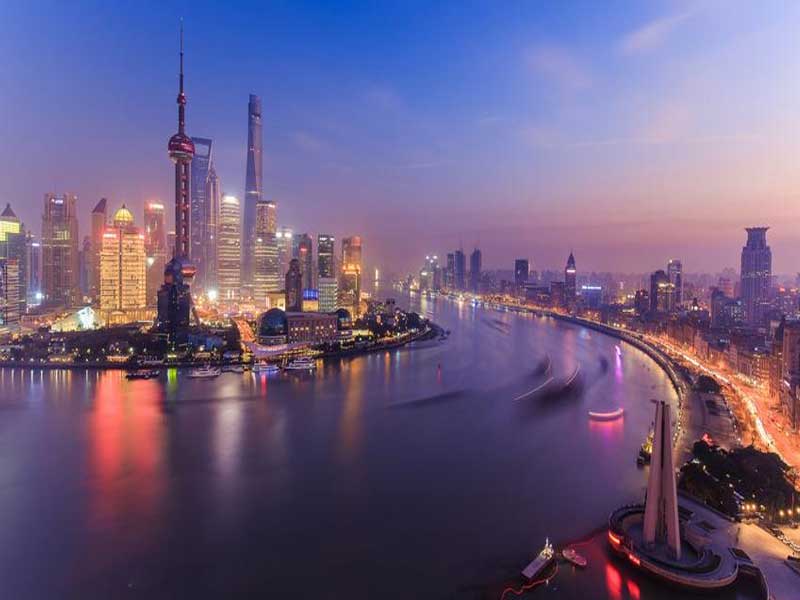
When you arrive in Shanghai, a global financial hub where modern skyscrapers meet historic lanes. Your guide and driver will meet you at Shanghai airport, to start your China tour.
Visiting Attractions: City God Temple, Shanghai Old Concession Area(Shikumen), Shanghai Museum, Shanghai Jinmao Tower, The Bund Shanghai.
A full day in Shanghai begins at the City God Temple, where the incense-scented hall sits surrounded by a lively market of food stalls and souvenir shops.
Next, step into the Shikumen lanes, narrow alleys of grey-brick townhouses with stone door frames. These residences, once home to ordinary families, now house small galleries or preserved rooms that show early-20th-century urban living.
Xintiandi adapts the same architecture into a district of open-air cafes, bookshops, and designer boutiques, allowing you to enjoy a coffee while seated in a restored lane house, feeling the blend of old and new.
At the Shanghai Museum, a sleek round building, galleries of bronze vessels, jade ornaments, and ancient calligraphy offer calm hours of discovery, each piece carrying its own historical context.
Later, ascend the Jin Mao Tower, whose tiered form recalls a traditional pagoda. From its upper floor, the city spreads out in every direction, with the Huangpu River curving through the dense grid. Finish at the Bund, where a row of colonial-era banks and hotels faces the high-rises of Pudong across the water. Strolling along the stone railing, you can watch ferries glide by and notice how the riverfront light shifts from bright afternoon to soft evening, each step revealing a different facet of Shanghai's long story.
Visiting Attractions: Zhouzhuang Water Town, Panmen Gate
After breakfast, a private vehicle takes you to Suzhou. Your first stop is Zhouzhuang Water Town, a canal town where waterways serve as main streets. Wooden boats drift past ancient residences, and every stone bridge carries its own name and local tale. Walking along the flagstone lanes, you can watch daily life unfold by the water: elderly women washing vegetables, shopkeepers hanging lanterns, and the gentle ripple of oars. A special highlight in Zhouzhuang is the paper-cutting workshop: under a crafts person's guidance, you fold and snip red sheets into delicate patterns, from blooming peonies to auspicious characters, gaining a feel for a folk art that has brightened festivals across generations.
Afterwards, you will been drove head to the Suzhou city center to visit Panmen, a well preserved gate complex from the Wu Kingdom period. Its unusual water and land gate system allowed both boats and soldiers to pass through. Climb the old ramparts for a view of the Grand Canal and the Ruiguang Pagoda, whose slender form rises gracefully against the sky. The adjacent park offers winding paths, ancient trees, and a quiet lotus pond, ideal for a reflective stroll.
Between Zhouzhuang's watery charm and Panmen's military heritage, this day presents two distinct faces of Jiangnan culture: one poetic, one strategic.
Visiting Attractions: The Lingering Garden, Suzhou Silk Museum, Taohuawu Street, Tiger Hill
Today's itinerary takes you through Suzhou's garden art and craft heritage. Begin at the Humble Administrator's Garden, the city's largest classical garden. Its pavilions, winding corridors, and lotus filled ponds are arranged to create ever changing views. Each turn of a path reveals a new composition of rocks, water, and framed foliage. The quiet corners invite you to pause and appreciate how light shifts across the tile roofs and rippling surfaces.
Next, the Suzhou Silk Museum traces the region's silk history from mulberry cultivation to finished brocade. Live looms and embroiderers at work let you observe the patience behind each glossy thread, while display cases show imperial robes and intricate patterns that once traveled the ancient routes.
Then, Taohuawu Areas, which was a historic printmaking center. Today, its narrow lanes hold small workshops where woodblock prints are carved and hand-printed, offering a glimpse into a folk art that decorated New Year pictures for centuries.
Afterward, head to Tiger Hill, a hillock site with a leaning pagoda that has stood for over a thousand years. The surrounding groves of pine and bamboo, along with the legend of a buried sword, give the place a contemplative air; climbing the steps, you can enjoy views of the old city walls and canal.
In the late afternoon, a vehicle takes you onward to Hangzhou, carrying the day's impressions of Suzhou's refined elegance.
Visiting Attractions: West Lake, Faxi Temple, Longjing Tea Village(Dragon Well Tea Village)
Today's highlight brings you to three iconic spots around Hangzhou. Start at West Lake, whose calm waters reflect willow-fringed causeways and distant hill pagodas. A leisurely boat ride allows you to appreciate the changing perspectives of the shoreline, while walking along Su Causeway offers pauses at arched bridges and shaded benches. The lake's mood shifts with passing clouds, making each visit a personal encounter.
Next, head to Faxi Temple, a Buddhist monastery tucked among wooded hills. Its yellow walls and dark-tiled roofs nestle against bamboo groves; the incense smoke and chanting create a serene atmosphere. You may join local devotees in lighting incense sticks or wander through the courtyard gardens, where ancient camphor trees provide cool shade.
Finally, arrive at Longjing Village, where terraced tea gardens climb the slopes. Here, you can stroll between rows of tea bushes, watch farmers hand-picking tender leaves, and sit in a farmhouse to sample freshly brewed Dragon Well tea. The village's quiet lanes and panoramic views over the valley encourage a slow pace, rounding out the day with a taste of rural tranquility.
Free morning. Then transfer to Hangzhou railway station for a high-speed train to Beijing, taking about 4.5–6 hours on the train. Upon arrival, Beijing, China's capital, its history spans millennia, while its streets pulse with daily life, culinary diversity, and cultural energy. Your guide awaits and brings you to the hotel for rest.
Visiting Attractions: The Forbidden City, Tiananmen Square, Beijing Hutongs
A full day exploring Beijing begins a visit to Tian'anmen Square, which is a historic public space in Beijing. It hosts national ceremonies and cultural events.
Then go to visit the Forbidden City, the imperial palace for 24 Ming and Qing emperors over five centuries. This red walled, golden-roofed complex of nearly 1,000 buildings aligns along the city's central axis. Walking through its grand halls and tranquil imperial garden, you sense the weight of dynastic ceremony and court life.
Afterwards, step into the hutongs, narrow alleyways formed by traditional courtyard homes. These lanes, many dating from the Yuan, Ming, and Qing dynasties, form the heart of old Beijing. A rickshaw ride or stroll lets you observe daily routines: vendors, mahjong games, and tea drinkers under the eaves, offering a glimpse into the city's living heritage
Visiting Attractions: Badaling Great Wall, Sacred Road, Overview the Bird’s Nest and Water Cube
After breakfast, you will be driven to the Badaling section of the Great Wall. This Ming-dynasty fortification guarded the northern approaches to Beijing for centuries. Its character changes with each season: spring blossoms brighten the slopes, summer foliage offers shade, autumn leaves bring warm colours, and winter snow dusts the crenellations. Walking along the wall, you enjoy views of the surrounding mountains.
Then you proceed to the Sacred Way, the avenue of stone animals and officials that lined the path to the Ming tombs, a stroll here reveals the craftsmanship of imperial rituals.
Returning to the city, the route passes by the Bird's Nest and Water Cube, two Olympic landmarks that stand out against the skyline. You reach downtown by late afternoon.
Visiting Attractions: Temple of Heaven, Yonghe Palace(The Lama Temple), the Imperial Colleague(Guozijian), Beijing Zoo
Today continues your discovery of Beijing’s old and modern layers. Start at the Temple of Heaven, where circular halls and blue-glazed tiles reflect ancient cosmic beliefs; local residents gather in the park for morning exercises, adding a human touch.
Then visit Yonghegong, a former princely residence turned Tibetan Buddhist monastery, with towering Buddha statues and drifting incense smoke.
Next, the Imperial College (Guozijian) stands as the highest educational institution of imperial times, its Pavilion of Edicts and stone steles tell stories of scholarly pursuit. Finally, Beijing Zoo features a panda house, where you can observe these gentle creatures resting or nibbling bamboo. Together, these places reveal different facets of Beijing’s heritage and contemporary charm.
See you off at Beijing airpoirt based on your final depart flight.This marks the conclusion of your exploration through the historic city-states of Shanghai, Suzhou, Hangzhou, and Beijing. We wish you a safe and pleasant flight.