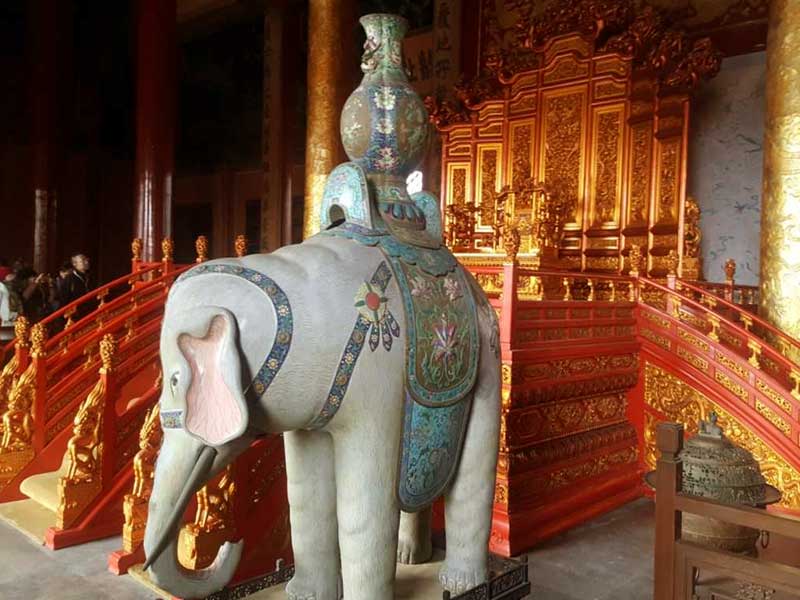
The Palace Museum, famously known as the Forbidden City, is the world's largest and best-preserved ancient wooden architectural complex. Located at the heart of Beijing, it served as the imperial palace for both the Ming and Qing dynasties, housing 24 emperors over nearly 500 years. Declared a World Heritage Site by UNESCO, it is not only a masterpiece of Chinese palatial architecture but also a treasury of ancient art and culture.
Key Highlights
Historical Significance: Built in 1420 during the Ming Dynasty, the Forbidden City covers 720,000 square meters and contains 980 surviving buildings. It was the political center of China until the last emperor, Puyi, abdicated in 1912.
Architectural Grandeur: The layout strictly follows traditional Chinese geomancy (Feng Shui) and ritual systems. The buildings are arranged symmetrically along a central north-south axis, symbolizing the supreme power of the emperor.
Treasure House: The museum houses over 1.8 million precious artifacts, including paintings, ceramics, bronzes, jade, and timepieces. Famous pieces include the Qingming Scroll and the Da Yu Ding.
Color Symbolism: The dominant colors are yellow and red. Yellow roof tiles symbolize the emperor's supreme authority (as the "Son of Heaven"), while red walls represent good fortune and happiness.
Layout & Must-See Spots
The Forbidden City is divided into two main parts:
Outer Court (Administrative Area): Meridian Gate (Wumen): The imposing southern entrance.
The Three Great Halls: The Hall of Supreme Harmony (Taihedian), where major ceremonies were held; the Hall of Central Harmony; and the Hall of Preserving Harmony.
Inner Court (Residential Area):
The Three Rear Palaces: The Palace of Heavenly Purity (where the emperor lived and worked), the Hall of Union, and the Palace of Earthly Tranquility (where the empress lived).
Imperial Garden: A beautiful garden with exotic rocks, ancient cypresses, and pavilions, located at the northern end.
Visitor Information
Location: 4 Jingshanqian Street, Dongcheng District, Beijing (south of Jingshan Park, north of Tiananmen Square).
Opening Hours:
April 1 - October 31: 08:30 - 17:00 (Last entry at 16:10)
November 1 - March 31: 08:30 - 16:30 (Last entry at 15:40)
Closed on Mondays (except statutory holidays).
Tickets: Admission requires purchasing a timed-entry ticket in advance via their official WeChat account or website. It is highly recommended to book several days ahead, especially during peak seasons.
Getting There:
Subway: Line 1 to Tiananmen East or Tiananmen West Station, then walk north through the square.
Bus: Routes 1, 2, 52, 82, 120, etc.
Tips for Visitors
No Retracing Steps: The Forbidden City is designed for a one-way, northward stroll. You enter through the Meridian Gate (Wumen) in the south and exit through the Gate of Divine Might (Shenwumen) in the north.
Wear Comfortable Shoes: The complex is vast, and walking on the "golden bricks" can be tiring. Be prepared to walk at least 2-3 kilometers.
Audio Guide: Rent an audio guide or use the official app for a deeper understanding of the history; the plaques provide limited information.