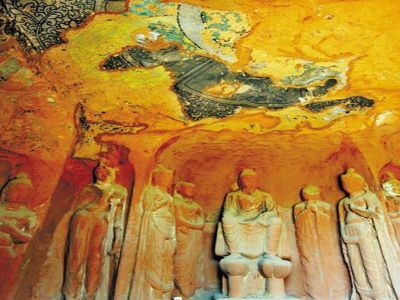
Located 55 km northwest of Guyuan, Ningxia, the Xumishan Grottoes are one of China's top ten grotto complexes and a national key cultural relic. Carved into red sandstone cliffs, they date back to the Northern Wei Dynasty (477–499 AD), with continued construction through the Western Wei, Northern Zhou, Sui and Tang dynasties.
The site features 162 caves and over 500 well-preserved Buddha statues across eight zones. Its highlight is the 20.6-meter-tall Maitreya Buddha in the Great Buddha Tower, Ningxia's largest sitting Buddha. The No.51 Cave, known as"Light of Sumeru", houses exquisite Northern Zhou carvings. A vital stop on the ancient Silk Road, these grottoes blend Indian Buddhist art with Chinese aesthetics, recording 1,500 years of cultural exchange.