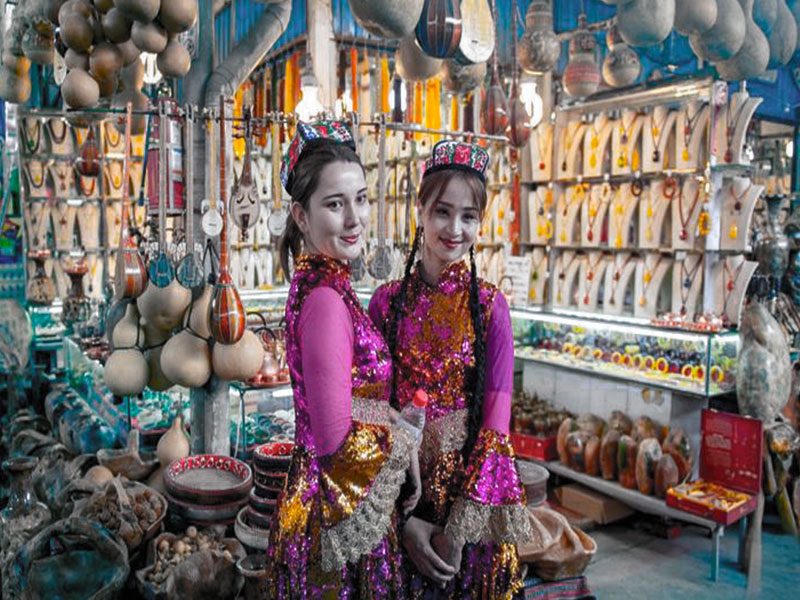
Known as the "International Trade Market of Central and Western Asia", Kashgar Grand Bazaar is the largest trading hub in northwest China, with a 2,000‑year history. Especially, Sunday Livestock Market, once famed as "Asia's Largest Livestock Market" , was a key Silk Road commerce node dating back to the Han Dynasty.
Located on the east bank of the Tuman River, the bazaar spans 250 mu, housing 21 specialized markets and over 5,000 stalls. It offers 9,000+ goods: intricate Uyghur carpets, silk, copperware, knives, dried fruits, and Central Asian specialties.
Kashgar's Sunday Livestock Market (Cattle & Sheep Bazaar) opens only on Sundays in the northern suburbs, a raw, vibrant slice of Uyghur rural life. Since ancient times, it has been a key Silk Road trading post. Herders and farmers gather with thousands of cattle, sheep, camels and donkeys. The air buzzes with animal sounds, dust and the aroma of roasted meat. The most fascinating sight is the silent hand‑negotiation tradition: buyers and sellers bargain secretly with finger gestures inside their sleeves. This age‑old custom, along with the lively atmosphere, makes it a real‑life folk museum of Xinjiang's ethnic cultures.
A vibrant blend of Uyghur culture and Silk Road legacy, it bustles daily. A feast for the senses, it's a living museum of ethnic traditions and cross‑border trade.