
Bespoke Travel Expert in China Maximum Service, Maximize Value, Authentic Experience for your Tours!
+86 15177317662
Why Us
Contact Us
Top China Tours

Beijing Hutongs

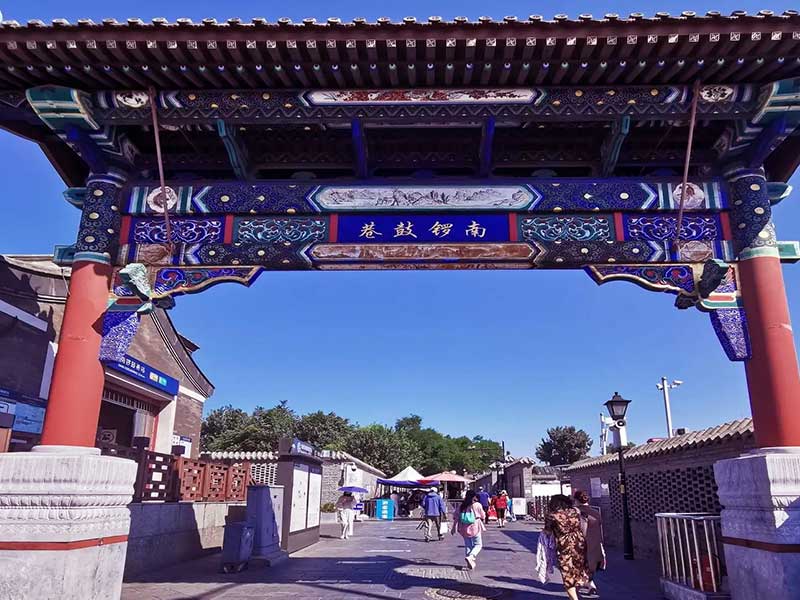
Beijing Hutongs Nanluogu Lane

Nanluoguxiang, a well-preserved ancient hutong in central Beijing, stretches 787 meters with a history of over 700 years dating back to the Yuan Dynasty. It serves as a classic symbol of old Beijing's courtyard culture.

Flanked by neatly arranged traditional quadrangle courtyards, this pedestrian street blends ancient charm with trendy vitality. Numerous creative shops, time-honored snack stalls, cozy cafes and handicraft stores line both sides. Visitors can taste authentic Beijing snacks, buy unique handmade souvenirs and admire elegant old gate carvings.

Unlike noisy commercial avenues, it retains the gentle lifestyle of local residents. The perfect mix of traditional architecture, folk customs and modern youth culture makes it a beloved tourist spot. It offers a precious chance to wander through old hutongs and feel the authentic soul of historic Beijing.
Beijing Hutongs Southern Percussion Lane

Beijing Hutongs Dongjiaomin Lane

Dongjiaomin Xiang, stretching 1.6 kilometers beside Tiananmen Square, is Beijing's longest hutong with a history dating back to the Yuan Dynasty, once named Jiangmi Lane.

In Ming and Qing dynasties, it housed imperial government offices and foreign envoys. After the Opium Wars, it turned into the Legation Quarter for Western powers, witnessing turbulent modern history. Lined with well-preserved Gothic, French and eclectic-style buildings, it features former embassies, foreign banks and the elegant St. Michael's Church, forming a rare European architectural complex in downtown Beijing.

Far from bustling commercial crowds, the quiet tree-lined street carries heavy historical weight. Walking along it, visitors trace China's vicissitudes of fortune. As a protected cultural block, it serves as a living textbook of modern Chinese history, blending exotic architecture with profound national memories.

Beijing Hutongs Guozijian Street

Also called Chengxian Street, Guozijian Street lies in Dongcheng District, Beijing, a time-honored cultural lane with over 700 years of history dating back to the Yuan Dynasty. It is Beijing's only street preserved with four traditional wooden archways and honored as one of China's Famous Historical and Cultural Streets.

Stretching roughly 680 meters, the quiet tree-lined road follows the classic layout of "Confucius Temple on the left and Imperial Academy (Guozijian) on the right". The Guozijian served as the supreme national university of the Yuan, Ming and Qing dynasties, where countless ancient scholars pursued Confucian learning.

Lined with red walls, ancient locust trees and courtyard houses, it radiates serene scholarly charm. Far less noisy than commercial hutongs, it blends time-honored Confucian culture, classical architecture and peaceful local life. A precious window into China's ancient education tradition, it draws visitors eager to feel the profound literary heritage of old Beijing.

Beijing Hutongs Yandaixie Street

Yandai Xiejie Street, located beside Shichahai Lake in Xicheng District, is one of Beijing’s oldest hutongs dating back to the Yuan Dynasty, with a length of only 232 meters. It gets its name for two reasons: its slanting outline resembles a giant tobacco pipe, and countless tobacco pipe shops lined the street in the late Qing Dynasty. Back then, it thrived as a bustling market selling antique paintings, jade and traditional smoking tools. The well-preserved Guangfu Taoist Temple stands here as a key cultural relic.

Connecting Di'anmen Outer Street and Silver Ingot Bridge, this pedestrian lane mixes ancient grey-brick courtyard houses with creative cafes, handicraft stalls and local snack shops. Less crowded than Nanluoguxiang, it retains authentic old-Beijing charm. Wandering along its quiet lanes, visitors can taste genuine local life and admire the peaceful lake views of Houhai, capturing the timeless folk spirit of Beijing hutongs.

Beijing Hutongs Maoer Hutong

Mao'er Hutong, one of Beijing's top ten historic hutongs, stretches 585 meters in Dongcheng District, linking Nanluoguxiang in the east and Di’anmen Outer Street in the west. Dating back to the Yuan Dynasty, it was named Zitong Temple Wenchang Palace in the Ming, renamed Mao'er (Hat) Hutong in the Qing for its numerous hat-making workshops.

Quieter and less commercial than Nanluoguxiang, it preserves rows of elegant ancient siheyuan courtyards. It houses precious cultural sites, including the former residence of Wanrong, China’s last empress, and the mansion of warlord Feng Guozhang. Old grey brick walls, carved gate headers and locust trees fill the lane with tranquil antique charm.

Free of bustling tourist crowds, it retains genuine local residential life. Walking down the peaceful street, visitors escape noisy shopping alleys and feel the profound history of old Beijing's elite dwelling culture, a hidden gem for hutong lovers.